Cheque Bounce New Rules – India’s banking landscape is undergoing a significant transformation as the Reserve Bank of India enforces a far more rigorous set of guidelines targeting check bounces in 2026. These updated regulations reflect a growing urgency within the financial sector to address payment defaults, rampant misuse of post-dated checks, and the mounting pressure on judicial systems burdened by check-related litigation. Whether you are a salaried professional, a self-employed individual, or a small enterprise owner, understanding these changes is no longer optional — it is financially essential.
The Core of the New Framework
At the heart of the 2026 regulations lies a tiered accountability structure that categorizes check bounce incidents by frequency, cause, and intent. Unlike earlier frameworks that offered considerable leeway to account holders, the updated rules draw clear distinctions between genuine errors and deliberate financial negligence. A first-time bounce caused by a minor oversight — such as a brief funding shortfall or a technical mismatch — will typically result in a formal bank notice rather than an immediate financial penalty.
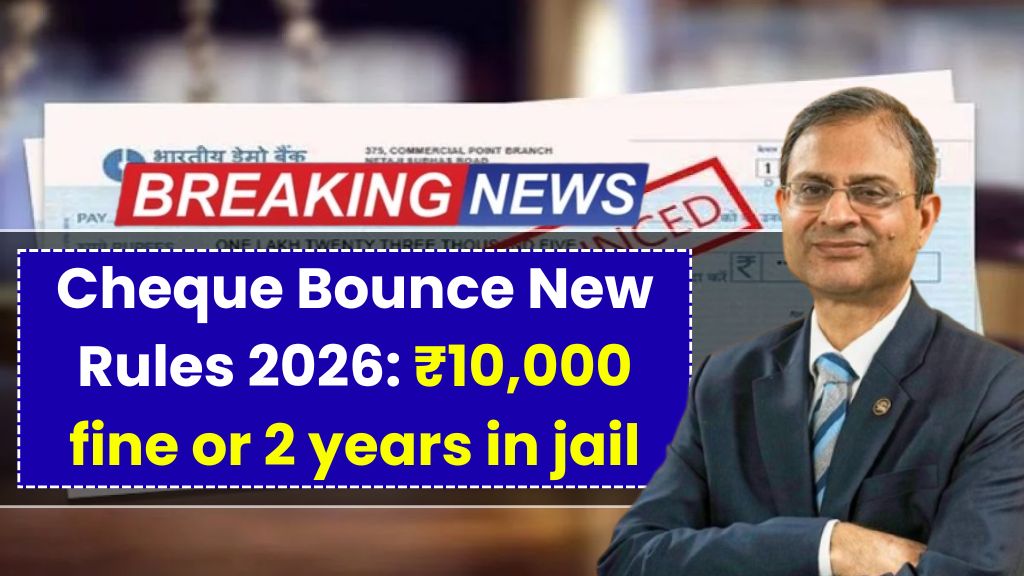
However, the rules become considerably less forgiving for repeat offenders. When a check bounces three consecutive times due to insufficient funds, the account holder faces a mandatory penalty that can reach up to ₹10,000. This fixed-penalty model is designed to send a firm message: the banking system will no longer absorb the costs of careless or fraudulent payment behavior. Financial institutions are now empowered to enforce these penalties with limited discretion.

Beyond monetary fines, banks retain the authority to impose operational restrictions on habitual defaulters. These measures include freezing the concerned bank account, suspending the issuance of fresh checkbooks, and flagging the account for enhanced monitoring. Such restrictions can have a ripple effect, impeding not just day-to-day transactions but also a person’s ability to participate in formal credit markets.
Real-Time Alerts as a Transparency Measure
One of the more forward-looking elements of the 2026 guidelines is the mandatory introduction of real-time communication between banks and account holders. Whenever a check is returned unpaid, the bank is now required to immediately notify the account holder through SMS and email alerts. This eliminates the old gap where customers sometimes remained unaware of a bounced check for days, during which further complications could compound.
This emphasis on immediate notification reflects a broader policy goal of fostering financial awareness at the individual level. When customers receive instant feedback about their account status, they are better positioned to take corrective action before the situation escalates. It also reduces the scope for misunderstandings between payees and payers, which have historically been a common source of banking disputes.

The Weight of Consequences on Creditworthiness
Perhaps the most long-lasting damage a check bounce can inflict is on a person’s credit profile. Under the new RBI framework, repeated check bounce incidents are expected to be factored into credit assessments conducted by financial institutions and credit bureaus. A damaged credit score can translate into higher borrowing costs, loan rejections, or even refusal of basic banking services such as overdraft facilities or credit card issuance.
For small business owners, the consequences are potentially even more severe. Many micro and small enterprises depend on post-dated checks as a primary instrument for managing receivables and payables. A single bounced check in this context can disrupt an entire supply chain, delay vendor payments, and chip away at the trust that forms the foundation of business relationships. Under the new rules, banks may also blacklist persistent defaulters, making it nearly impossible for them to access institutional credit in the future.
Why This Regulatory Shift Was Long Overdue
India has witnessed a sustained rise in check bounce incidents over the past decade, with courts across multiple states reporting significant backlogs of cases filed under the Negotiable Instruments Act. The problem is not just one of volume — the nature of check bounces has evolved, with increasingly sophisticated tactics being deployed to delay payments or evade financial obligations. Large-value post-dated checks issued without corresponding funds have become a tool of exploitation in certain commercial transactions.

The RBI’s 2026 guidelines are a direct response to this systemic deterioration. By introducing enforceable penalties, mandatory notifications, and account-level restrictions, the central bank aims to restore the credibility of checks as a financial instrument. The underlying philosophy is simple: if checks are to remain a valid payment method in India’s evolving economy, they must carry the same reliability and accountability that digital transactions now offer.
Practical Steps to Protect Yourself
The most straightforward way to avoid falling foul of these new rules is to adopt disciplined account management habits. Before issuing any check, verify that your account holds sufficient funds to cover the payment, with a reasonable buffer for unexpected debits such as standing instructions or service charges. For post-dated checks, plan your finances so that the required amount is available on or before the date the check is presented for clearing.
Attention to detail is equally important when filling out checks. Mismatched signatures, incorrect dates, or overwritten figures are common causes of technically bounced checks that carry unnecessary penalties. Taking a few extra minutes to review each check before handing it over can save you significant trouble down the line. When in doubt, opt for digital alternatives such as NEFT, RTGS, UPI, or auto-debit mandates, which offer the same transactional outcome with far less risk.

The Bigger Picture: Nudging India Toward Digital Payments
The 2026 check bounce rules are not occurring in isolation — they are part of a broader strategic shift aimed at accelerating India’s transition to a predominantly digital payment ecosystem. By making paper-based transactions less tolerant of errors and negligence, the RBI is effectively creating incentives for individuals and businesses to migrate toward real-time digital payment platforms. India’s UPI infrastructure, which already handles billions of transactions monthly, stands to benefit significantly from this regulatory nudge.
The Reserve Bank of India’s strengthened check bounce regulations for 2026 represent a calculated effort to instill greater discipline, transparency, and accountability within the country’s payment ecosystem. The penalties are real, the restrictions are enforceable, and the reputational consequences are lasting. Whether you view these rules as a deterrent or an opportunity to build better financial habits, one thing is certain — staying informed and staying prepared is the only sensible response.